Showing posts with label writers. Show all posts

Monday, March 23, 2015

Louisa May Alcott Goes to War

March 23 - Today's post contributed by Michaela MacColl

A note from KidLit Celebrates Women's History Month: Michaela MacColl has generously offered two copies of her upcoming book, The Revelation of Louisa May. The entry form is below her post.  Enjoy the post and good luck!

Louisa May Alcott Goes to War
Louisa May Alcott, c. 1862

Louisa May Alcott’s most famous work by far was Little Women.  Her endearing story of four March sisters and their beloved mother, Marmee, trying to grow up and make ends meet during the Civil War was an instant success. The book spawned several sequels and has never been out of print. For Louisa, who wished as a child that she could become rich with her pen, Little Women was the book that fulfilled her dreams.  Before Little Women, she had written gothic stories under a pseudonym so as not to embarrass her family. Her first literary success came from a short collection (only four stories) called Hospital Sketches, published in 1863.  The Sketches were based on letters she sent home from a Union Army hospital in Georgetown during the civil war.

From an 1872 edition of "Hospital Sketches"

Fans of Little Women will recall that Mr. March is absent for most of the book because he is a chaplain in the Union Army.  Fierce abolitionists, the Alcott family supported emancipation, but Louisa’s father was also a pacifist. He would not be going to war, nor would his four daughters. Perhaps Louisa felt that the burden of showing the family’s support fell to her. At first she said, "as I can't fight, I will content myself with working with those who can." But Florence Nightengale had paved the way during the Crimean War for women to be useful in the hospitals. On her 30th birthday, Louisa wrote in her journal, "Thirty years old. Decide to go to Washington as a nurse if I could find a place."

Her career as a nurse was only six weeks before she succumbed to typhoid fever and had to return home. During that time she saw horrific injuries from the Battle of Fredericksburg. She wrote home about the young soldiers she met, washed, tended to their wounds and all to often mourned. She learned “the wisdom of bottling up one’s tears for leisure moments.”  Further, she observed, “A hospital is a rough school, its lessons are both stern and salutary.”

Once home, her family encouraged her to publish her letters as literary sketches. To her surprise, the book was an instant critical and commercial success. The nation was hungry for a woman’s perspective on the War. Her stories were about terrible and gruesome things, but leavened with humanity, wit and empathy.  When the troops returned to her hometown of Concord, Louisa and the other women prepared a feast for them. Little did they know that the troops had prepared a surprise for her! Sixty young veterans marched to her house, and the men raised their caps and saluted Louisa.  Later, Louisa mused about the success of her little sketches, "I find I've done a good thing without knowing it."

In my novel The Revelation of Louisa May we see a 17 year old Louisa trying to juggle her family responsibilities, her writing and a fugitive slave. The Alcotts were part of the Underground Railroad. Incidentally, Louisa also solves a murder.  That girl would grow up to serve in the Civil War in any way she could.  When she showed people a glimpse of the terrible hospitals and the dignity of the patients and doctors, she served her country well. Louisa wrote “Strong convictions precede great actions.” She was right.


You can find Michaela at www.michaelamaccoll.com, follow her on Facebook at AuthorMichaelaMacColl or tweet to her @MichaelaMacColl.


a Rafflecopter giveaway

Wednesday, March 4, 2015

Emily Arnold McCully's thoughts on Lizzie Murphy and Ida M. Tarbell


March 4 - Today's post contributed by Emily Arnold McCully

I have always loved baseball. I was good enough that the boys let me play with them. A good mimic, I developed a throwing arm by watching the pros. I never owned a proper mitt but there was always a right-handed one to borrow when I needed it. I loved catching the ball with a swift twist that cradled it in the sac between the thumb and forefinger of the mitt. Leather! Malleable, fragrant, durable. The ball was great, too, with its hard red stitching.

I threw and batted lefty, but could switch hit too, which supposedly confused the opposing pitcher. Pitching seemed the supreme skill, so I drew a strike zone on our garage door. Every afternoon after school I hurled my ball at it. Pretty soon, I hit the zone consistently and soon after that, I was pitching in most games.

The Dodgers were still in Brooklyn when I was a child, and I listened faithfully to their games on the radio. I can still name most of the greats on that teamnot just Jackie Robinson.

Childhood ball playing inspired one autobiographical baseball book. Its protagonist was a mouse who practiced the way I did in order to make the team. My other baseball book, one of a series about a pair of zany grandmas, is called GRANDMAS AT BAT.  That book and MOUSE PRACTICE were really just warm ups, waiting for Lizzie Murphy, aka Queen of the Diamond.


When an old friend in Providence, R.I., told me about her, I realized I had been handed my ideal heroine. It was news to me that a real life woman had actually played on professional baseball teams alongside men and the arrangement was accepted by everyone. It underscored the cyclical, even whimsical nature of women’s quest for equality, since that couldn’t happen today. Lizzie’s career was fairly long, but the most interesting part of it, for a picture purposes, was the beginning, when she asserted herself and demanded equality.

While I was working on the Lizzie Murphy story, I researched the life of a very different heroine - Ida M. Tarbell - who did not demand equality because she believed that women were inherently equal to men. For her, the crisis lay elsewhere. American democracy was threatened by the greed and corruption unleashed in the Gilded Age. Tarbell thought women could save it. She argued that they must devote themselves to raising children to be good citizens. Ironically, Tarbell was urging women to stay home at precisely the time Lizzie Murphy was out playing professional baseball.

Tarbell’s ideas about women were disturbing to me, but at the same time, I admired her great achievements as a “muckraker” (she preferred the title “historian”) and the way she made her way brilliantly in a man’s world. As I worked on her biography, I tried to get under her skin and understand the contradictions in her makeup.

Tarbell’s investigative journalism helped bring about important reform. Her story is relevant to our lives today. Money has corrupted public life much as it did a century ago.  And as quaint as her ideas about women may seem to girls today, with all of their freedoms and opportunities, most people agreed with her in the very recent past.


A teenager after World War II, I expected to accommodate myself to a world run by men, as Tarbell had. (We both expected to be subversives in that world). But my generation brought on the second wave of feminism and demanded that the world must change and admit women on an equal footing with men. That work is ongoing! I hope to keep contributing to positive change with stories of the achievements of women who earned their place in history.


Emily Arnold McCully has been creating children’s books for fifty years. Her stories often feature historical or fictional girls and women who challenge convention. MIRETTE ON THE HIGH WIRE was awarded the Caldecott Medal in 1993. IDA M TARBEL was a finalist this year for the YALSA award for best nonfiction for teens.

Wednesday, March 26, 2014

Miss Emily - Our Laughing Goddess of Plenty

March 26 - Today's post contributed by Burleigh Mutén

Miss Emily – Our Laughing Goddess of Plenty
©2014  Burleigh Mutén


Emily Dickinson loved children.

This is one of the first facts
 I tell the five-year-olds I teach
when we study Dickinson.

“Not only did Emily Dickinson
grow up in Amherst, just like you,”
I tell them,  “She loved nature,
just like you, and  
she liked to write about it. 

She wrote many poems about bees
and flowers, the wind,
 birds, clouds at sunset,
the color of the hills at sunrise.

A lot of people all over the world
know about Emily Dickinson
and her poems,” I say,
“but most people don’t know
that she loved children.”

“Did she have any children?” someone asks.

I explain about the lucky children
who lived next door –-
her niece and nephews
and the children of the neighborhood
who loved to play in her yard
with hope that she might add  
a whimsical contribution to their fun.
Sometimes a sweet treat.

I ask the children in my class
if they know a grown-up who
knows how to talk to children,
which is my way of saying,
Do you know anyone
who really respects you,
someone who is genuinely interested
in you and your thoughts,
someone who knows  how
to join your play as an equal
for those precious moments
when you pretend together?            

Their hands shoot up eagerly.
Sometimes someone
names a special aunt.
The perfect response.

One of Dickinson’s young neighbors,
MacGregor Jenkins, grew up and wrote
for Harpers and The Atlantic Monthly.
He also wrote a memoir about
his young life on Main Street, Amherst called
EMILY DICKINSON, FRIEND AND NEIGHBOR
in which he describes the poet as
 “our laughing goddess of plenty.”

“It is impossible to imagine a personality
that would appeal to children
more than Miss Emily’s,”
wrote Jenkins. “One moment her eyes
were dancing with fun, filling
our hearts with a very new
and very wonderful feeling.
She was a joyous person.”


©Matt Phelan

The Teacher and Writer Within Me
instantly leapt into a lively conversation.

“A mischievous,
playful Miss Emily
is the way
to introduce young children
to Dickinson,” said the Teacher.

“You can show youngsters,”
said the Writer,
“that Emily Dickinson didn’t
totally sequester herself
in her home. She, in fact,
never stopped interacting
with the children she loved.”


It’s well documented that Dickinson
wrote many notes to the children.
We also know from her letters and poems
that she enjoyed watching the circus
parade past her home.

“The plot develops!” cried the Writer Within.

I started the story, writing in prose.

“But you love verse novels,” insisted the Writer.

“And so do young readers,” said the Teacher.

“You’re a poet,” whispered Miss Emily
as I sat at the keyboard. “Enjoy yourself!
Have a heyday with lineation!
Play with alliteration!”

“Ooh,” said the Writer and the Teacher together.

So I did!
I played with all aspects
of writing free verse
just as I’m doing right now.

MISS EMILY generously offered me
the chance to go “public like a frog”
with the secret I’d kept
since I was a teen: I am poet.

I was walking ‘round the reservoir
near my home one day when the first lines
of the book came into my head.

©Matt Phelan

Van Amburgh & Company’s  Great Golden Menagerie
and  Frost’s Roman Circus and Royal Coliseum
came to Amherst in June 1877.
The posters announced 175 horses,
56 wagons, five of the world’s champion riders,
bareback somersaulting equestrians,
the largest elephant in the world,
and a two-horned rhinoceros.

©Matt Phelan
It was fun researching
and writing MISS EMILY,
but it was not easy writing
a note to the children
which fit the story
but in actuality were my words --
not Dickinson’s.

I held my breath after submitting
the manuscript to a Dickinson scholar
and sighed when she returned it
with compliments.


As a poet Emily Dickinson was true
to her authentic voice
as a writer and person.
She was not fond of convention.
In any realm of her life.

As an educator,
I believe it’s vital for a child
to explore and find
her own writer’s voice.
.
Thanks to Miss Emily,
I claimed my own voice as a poet.
May MISS EMILY’s young readers
do the same!


Burleigh Mutén is the author of five children’s books. She is a kindergarten teacher in Amherst, MA and a member of the Emily Dickinson International Society. She has led writing workshops for older children throughout New England, including workshops focused on Dickinson and her work in which young authors actually write in the houses of the Emily Dickinson Museum.


Thursday, March 28, 2013

Louisa May's Battle: How the Civil War Led to Little Women

March 28 - Today's Post Contributed by The Fourth Musketeer


Louisa May Alcott is famous around the world as the author of Little Women, one of the most beloved works of literature for children, but what is less known is that she may never have had a career as a writer at all if not for her valiant service as a nurse during the Civil War.

It is this lesser-known part of Alcott's life that award-winning author Kathleen Krull concentrates on in her handsome new picture book about the iconic author, Louisa May's Battle:  How the Civil War Led to Little Women (Walker Books, 2013).  

Alcott came from a family of dedicated abolitionists, and longed to help the union effort in some concrete way.  Of course educated women from "good families" rarely worked outside the home in those days, but the Civil War gave some women the opportunity to work as nurses, provided they met the requirements:  at least thirty years old, "very plain," single, strong, and with two character references.  Alcott was able to meet all these standards, and soon was on a 500 mile long trip to Washington D. C., where she was assigned to work at a hospital--in reality an old hotel.  Her duties included shocking activities like undressing and bathing the men, bandaging wounds, and most importantly, keeping up the men's spirits.  


Krull describes how Louisa, after just a few weeks of nursing, became desperately ill with typhoid fever, and had to be taken home to recuperate.  While she did not return to nursing, she did return to her writing, which up until that time had been published but did not enjoy much success.

Krull's lively text is liberally sprinkled with quotes from Alcott's colorful and detailed letters home to her family.  These letters were published at the time in an abolitionist newspaper, and later as a book, Hospital Sketches.  This slim volume was her first to be published to critical acclaim.  As Krull points out, the book was Alcott's first to be published out of her own experience, and the success led directly to her being asked to write a "girls' book."  This, of course, proved to be Little Women, which was based on her own family and which she set during the  Civil War, one of the first novels to be set during the turbulent period which forever changed the United States.  The book became a huge hit, and led to a lucrative writing career for Alcott.  

Back matter includes a brief commentary on the early history of women in medicine, a map detailing the Battle of Fredericksburg and a brief description of this "nightmarish" battle, and a list of sources.  Among the sources listed are websites, children's books by Louisa May Alcott, and books about Alcott, including those for young people and for adults.  


Readers will enjoy the old-fashioned look of this large picture book, which is printed on ivory-colored antique style paper.  The illustrations by Carolyn Beccia, created with Corel Painter digital oils on gessoed canvas, also provide an old-fashioned feel.  Her paintings have a realistic yet statuesque quality, and are infused with earth tones that suggest the sepia photographs of the Civil War era.  In many of the illustrations, Louisa wears a red shawl that perhaps suggests the great bloodshed of the war and often provides the only spark of bright color.  Above, in one of the most striking illustrations, Louisa is in the process of writing Little Women, and imagines all the events of her life as a patchwork quilt.

I would highly recommend this new book to introduce young readers to Louisa May Alcott, either before or after reading one of her classics.  It's an inspiring look at a brave and talented woman, one who introduced strong female characters in her classic stories.  Of course, the book would also enhance a unit on women's history or the Civil War.

Margo Tanenbaum is proud to be working as a children's librarian in Southern California, where she loves nothing more than matching children with books whose stories they will treasure.  She blogs about historical fiction and history-related nonfiction for young people at The Fourth Musketeer, and is co-organizer of Kidlit Celebrates Women's History Month.  You can also find her reviews on Amazon and Goodreads.  

Thursday, March 14, 2013

Celebrating Women in Picture Books

March 14 - Today's post contributed by Dianne de las Casas

Celebrating Women in Picture Books
By Dianne de Las Casas

In England, in 1879, a 21-year-old by the name of Kate Greenaway published a book called Under the Window, written in simple rhyme. Having previously only illustrated books, Greenaway was pleased that her first solo book effort became an instant bestseller. Working with the firm of Edmund Evans, Greenaway’s art was reproduced using a method called chromoxylography, in which the colors were printed from hand-engraved wood blocks. This gave her books vibrant color and her subsequent books became as popular as established authors/illustrators Walter Crane and Randolph Caldecott. Greenaway’s contribution to children’s literature in the 19th century led the way for women in what would become the children’s book publishing industry. Her body of work has been recognized with creation of the Kate Greenaway medal in 1955, an award that honors an outstanding illustrated book for children in England.
A few years later, in 1901, a young woman named Beatrix Potter self-published a collection of stories about a little rabbit called Peter. In 1902, The Tale of Peter Rabbit, was published by Frederick Warne & Co. Her books, celebrating meadow and farm animals and the English countryside, became wildly popular. She wrote and illustrated 23 books over 20 years, becoming one of the best-selling picture book authors in the world. Today, Beatrix Potter’s books have been transformed into songs, ballets, plays, film, and animation. Potter was also one of the first children’s picture book authors to parlay her characters into a successful line of merchandise.
Across the pond in the United States, a book of feline nature would change children’s literature. Wanda Gàg’s picture book, Millions of Cats, was published in 1928 and won a Newbery Honor. Gàg went on to win several more awards including another Newbery Honor for her book, The ABC Bunny, and two Caldecott Honors for Snow White and the Seven Dwarfs and Nothing at All. Millions of Cats is the oldest American picture book in print.
Also in the United States, a 27-year-old author/illustrator named Margaret Wise Brown published her first book with Harper & Brothers, When the Wind Blew. Little did she know that one of her picture books would change children’s bedtime rituals forever. One of her most popular titles, The Runaway Bunny, was published in 1942. In 1947, the same year Goodnight Moon was published, Brown won a Caldecott medal for her book, Little Lost Lamb. The book was written under the pseudonym, Golden MacDonald. Over her lifetime, and under four pseudonyms, Brown published over 100 picture books. Goodnight Moon went on to become one of the most beloved picture books of our time with over 4 million books in print. It was named one of the “Top 100 Best Picture Books” by School Library Journal.
Charlotte Zolotow is an editor of more than 100 books and author of more than 90 books for young readers. In recognition of her distinguished career, the Cooperative Children’s Book Center, established an annual award honoring the best picture book text, “The Charlotte Zolotow Award.” Zolotow says, “…radio, computer, TV, or any future technology will never replace the personal experience of reading a book. It is a private experience between writer and reader, which cannot be replaced.”

These exceptional women paved the way for modern female picture book authors such as Jane Yolen, who has published over 300 books. With two Caldecott medals and many more awards for her work in children’s literature, Yolen is one of the most influential modern picture book authors. Her picture book series, How Do Dinosaurs?, sold millions of copies worldwide. Yolen says, “I have always believed that literature begins in the cradle — the poems we say to the babies, the stories we tell them — prepare them to become part of the great human storytelling community.”
Likewise, the dynamic duo of Jane O’Connor and Robin Preiss Glasser became internationally acclaimed with their Fancy Nancy picture books, celebrating all things French and fancy. The series grew into a publishing phenomenon with bookstores throwing Fancy Nancy parties and young girls dressing up in tutus, boas, and tiaras. They made being “girly” fashionable and introduced “fancy” vocabulary words to young girls.

Women have made an indelible mark on children’s literature and continue to change the way picture books impact the literary landscape. Exciting new picture book authors like Tammi Sauer (Princess in Training) and Jesse Klausmeier (Open This Little Book) give us books that encourage us to celebrate the wonder in the world. Established writers like Jacqueline Woodson, who won the 2013 Charlotte Zolotow Award for her book, Each Kindness, continue to write books that inspire us and make us think. We are lucky to live in an age where technology makes it easier to access information about the best picture books the women of our world have to offer.


March is Women’s History Month so celebrate by reading a picture book written and/or illustrated by a phenomenal woman!

About Dianne de Las Casas

Dianne de Las Casas is an award-winning author, storyteller, and founder of Picture Book Month, who tours internationally presenting author visit/storytelling programs, educator/librarian training, and workshops. Her performances, dubbed “revved-up storytelling” are full of energetic audience participation. The author of more than twenty books, her children’s titles include The Cajun Cornbread Boy, Madame Poulet & Monsieur Roach, Mama’s Bayou, The Gigantic Sweet Potato, There’s a Dragon in the Library, The House That Witchy Built, Blue Frog: The Legend of Chocolate, Dinosaur Mardi Gras, Beware, Beware of the Big Bad Bear, and The Little “Read” Hen. Her 12-year-old daughter is the culinary star, Kid Chef Eliana. Visit Dianne’s website at diannedelascasas.com. Visit Picture Book Month at PictureBookMonth.com.


Wednesday, March 6, 2013

No Coward Soul

March 8 - Today's post contributed by Catherine Reef

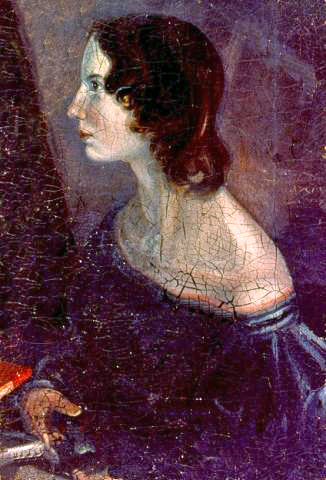
Portrait of Emily Brontë
by her brother 
Branwell Brontë.
No Coward Soul

In 1842, when Emily Brontë was twenty-four and studying at a Brussels pensionnat, her teacher struggled to make sense of her bold, singular mind. Upon reading her highly original essays (written in French, a language in which Brontë had recently and rapidly gained facility), Constantin Heger could only conclude, "She should have been born a man." A man with her gifts could have been "a great navigator," Heger speculated. "Her powerful reason would have deduced new spheres of discovery." Yet it was useless to think of what might have been. Logic and rational argument were manly attributes. Brilliance in a woman was wasted.

Certainly, having brains put a young woman at a disadvantage in the marriage market. "The love of a wife for her husband is to be associated with reverence, submission, deference," counseled The Wife and Mother, a manual published in 1841. The master of the household wanted a spouse who would yield to his decisions "with grace and cheerfulness," not one who would second-guess him.

Of course, with her total indifference to fashion, blunt manner in company, natural reclusiveness, and lack of money, Emily Brontë was unlikely to attract a husband anyway. But then she never expressed a wish to have one. She was wedded to the bleak landscape surrounding Haworth, the noxious village in northern England that had been her home since early childhood. The wind that swept the surrounding moorland fueled her creativity as no human bond ever could. In singleness she thrived.

In this, too, Emily Brontë was unusual. Almost without exception, middle-class girls in Victorian England sought marriage. Matrimony gave a woman the security of a home and a place in society, even if it robbed her of legal status. Her property and future inheritance became her spouse's; he had custody of their children; and, before 1857, it was all but impossible for her to obtain a divorce, however heinous the treatment she might have received. The Wife and Mother advised her to view her husband's misconduct "rather as an indication of thoughtlessness than of settled unkindness"; she was to "look upon it rather as an error than a crime." And the preferred way to combat a husband's moral lapses? Setting an example: "Endeavouring, by gentle influence, to lead such a course of moral discipline as will be likely to eradicate evil."  Also, we must not forget that even in the happiest unions, a wife faced the risks and demands of constant childbearing.

Any one of us might prefer staying single to choosing such a fate, but women today have many more options. A single woman without an income needed to work in Brontë's time (as in our own); unfortunately for her, the only profession open to a respectable female in the Victorian period was teaching.  She could be hired as an instructor in a school for girls or as a governess in a private home, but to accept either position was to toil for long hours at low wages and to step down socially. After all, no true lady worked for money.

Like her sisters, Charlotte and Anne, Emily Brontë tried teaching, and, like them, she hated it. For a few months in 1838 and 1839, Emily was employed at Miss Patchett's School, Halifax. She was as ill-suited to the school's dulling routine as she was to marriage. She made one friend in Halifax, the school's dog. Torn from the home and wild country that she loved, she grew depressed. "I fear she will never stand it," said Charlotte, who was only somewhat better than Emily at conforming to society's expectations. Emily's depression manifested itself as physical illness, and she was back in Haworth before the second term ended.

The only life to which Emily was suited--the only one that challenged her mind and freed her fancy--was that of a writer, and writing was considered the province of men. About women authors the critic George Henry Lewes scoffed, "Are there no stockings to darn, no purses to make, no braces to embroider?" Of course, there were women of letters, even successful ones like Frances Trollope and Maria Edgeworth, and the author of Female Writers (1842) argued that the world of literature held a place for women: "A full-voiced choir would not be considered complete without some female voices." Still, many Victorians agreed with those who compared literary women to rickety children and "monstrosities of nature."

 George Henry Lewes mocked women writers in 1850,
 yet four
 years later he was living with Mary Ann Evans  (the novelist George Eliot).

Wanting to be judged as the equals of male writers--in other words, on the basis of their work alone, Emily and her sisters chose masculine pseudonyms when they submitted their collected poems for publication in 1846, becoming Currer, Ellis, and Acton Bell. Emily (Ellis) was the most gifted poet of the three. In verse she praised imagination, and in so doing declared herself a child of the Romantics:

Oh, my true friend! I am not lone,
While thou canst speak with such a tone...

Through poetry she pondered the mutability of life; she addresses the stars, her nighttime companions; and she asserted her individuality. "No coward soul is mine," she proclaimed in one valiant poem.

Heedless of "the growling thunder, and the great drops that began to plash around her," Catherine Earnshaw calls out for Heathcliff. This illustration is from an edition of
Wuthering Heights published in the early twentieth century.


With the appearance of Wuthering Heights, in 1847, Emily Brontë moved beyond comparison with other writers, male or female, and into the realm of genius. Her groundbreaking novel perplexed readers when it was written, and it remains enigmatic today. Is it a story of love or a saga of revenge? Is Brontë's hero, Heathcliff, a man scarred by his past or an emotional force as strong as a moorland storm? Is the love between Heathcliff and Catherine Earnshaw--the powerful love that sets the plot in motion--a force for good or ill? "I am Heathcliff!" Catherine cries; whatever can she mean? These are questions to ponder rather than answer. Brontë's characters have so much depth and her plot possesses so many levels that Wuthering Heights resists neat conclusions. It's as impossible to sum up as a person we have come to know well.

The wonder is that it was written by a woman in her twenties who spent most of her life in her father's house in a remote English village, a woman who never knew a man's love, who so shunned the world that if she sketched herself she did so from the back, with her face turned away. A brilliant woman, an intrepid navigator of the heart and stars, no coward soul was she.

Catherine Reef

Editor's Note:
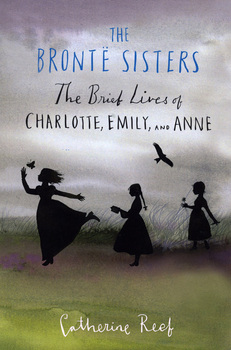
Catherine Reef's book, The Bronte Sisters: The Brief Lives of Charlotte, Emily and Anne was published by Clarion in 2012.  Its awards include: 

  • Junior Library Guild Selection
  • Booklist, *starred review*
  • Kirkus, *starred review*
  • Publishers Weekly, *starred review*
  • One of Kirkus's "Best Teen Books of 2012"


Sunday, March 3, 2013

Sy Montgomery on Temple Grandin

March 3 - Today's post contributed by Sy Montgomery


To people who know my work, writing TEMPLE GRANDIN-- a biography for young readers of the brilliant autistic woman who designs humane handling facilities for food animals--may have seemed like a major departure from my usual offerings.  

I write for both adults and children, and all of the books I had written—to date there are 17 of them, two more coming out later this year, another next—have been about animals. My work usually involving adventures in swimming with pink dolphins in the Amazon or seeking giant tarantulas in the rainforests French Guiana or trekking into the Altai Mountains of the Gobi in Mongolia searching for snow leopards. Of my kids books, my best known as in the Scientists in the Field Series I developed with a photographer for Houghton Mifflin. The first of these involved Nic and I working in a pit with 18,000 snakes. You get the picture. 

Like most people, I work where I am most happy and comfortable--and that’s among animals. It doesn’t bother me much that this often entails fishing leeches out of my socks and underwear at the end of the day, or that my bed might be invaded by ants or my sleep interrupted by rats running over my head. That suits me much better than a cocktail party. I am much more at home with animals than with most people.

That’s not the only reason I write about animals, of course. I write about animals because I feel their lives matter—much more than much of humanity understands or is willing to admit. I write about animals because I find everything about them—their senses, their powers, their minds –absolutely fascinating. I’ve always been drawn to minds different from my own.   


And this was what had drawn me to Temple Grandin nearly two decades before I would ever imagine writing a book about her. Oliver Sacks, a neuroscientist whose work I have followed with great interest for a long time, wrote a story about this brilliant autistic woman in his periodic column, Neurologist’s Notebook, in The New Yorker in 1993. She was of special interest to me because she was using her unusual mind to help a group most people would rather not think about: the 10 billion animals on American factory farms whose meat, milk and eggs harvest for food. She is famous for designing humane slaughter houses. I’ve been a vegetarian for 30 years—ever since I read ANIMAL LIBERATION by Australian philosopher Peter Singer. But I am well aware that most Americans are not, and I am so grateful somebody is finally doing something to make these creatures’ lives and deaths less horrific and more humane.  

So after that first story in The New Yorker, I kept up with Temple’s career and enjoyed her own excellent books for many years.

Now fast forward to an awards ceremony in 2010. I’m fixing to give a speech (awkward), wearing panty hose and a skirt (REALLY awkward) and sitting with well-dressed editors and higher-ups from my children’s books publisher at a luncheon. It’s there I learn that Temple’s publisher, Harcourt, has merged with Houghton Mifflin. One of the top folks at Houghton, who I like and admire very much, has met Temple. She thinks a kids’ book on Temple would be great and that I should write it.

My beloved editor at Houghton, a good friend I’ve worked with since my first children’s book, published in 1999, sitting at the same table, gasped in horror at the suggestion. She’s a vegetarian like me. A book on a woman who designs slaughterhouses! And for children! What could be more horrible?

But to her shock, I immediately decided to write the book.

This was a perfect book for children, and perfect for me to write. Because here is a book about a famous person who—far more than overcoming a disability—has actually found the gifts of her unusual mind, and is using those gifts to help animals. And kids were the best audience I could hope to reach with this message: that the world needs the gifts of all kinds of minds. That includes the minds of people with autism and other differences labeled disabilities—and the minds of animals.   

I love writing for adults, since you can use more and all kinds of words. But I love writing for kids because that’s how you change the world. Not just because kids are tomorrow’s leaders. Kids are TODAY’S leaders. An educator and researcher from Unity College once told me that 70 percent of the environmental news parents receive comes to them not from newspapers or TV—but from their kids. Children’s choices drive many marketplace and home decisions, from whether to buy an SUV versus a hybrid to whether to recycle. Children’s voices are incredibly powerful. Adults are always mounting letter writing campaigns and creating fund-raisers and attending protests, and these are often ignored. But who can ignore such a thing led by a kid?

Kids call ‘em like they see ‘em. They’re not about to accept the world the way it is because that’s the way it always was. Kids know animals matter, and they are brave enough to speak up for them. Tell an adult about factory farming, and chances are he’ll whine that you’re ruining his enjoyment of his hamburger. Tell a kid and she’ll stop eating hamburgers—and start urging her family and friends to do so as well. Or—and this could change even more lives--start imagining ways to battle the cruelty that plagues the mammals and birds whose flesh, milk and eggs provide our food.

That’s what Temple did. Because of her autism, she could easily imagine the life of a farm animal, or just about any other animal, for that matter. A diagnostic feature of autism is language difficulties. To this day, Temple thinks not in words, but in pictures. Animals don’t think in words, either. And autism gave Temple another window into the minds of animals as well. Another feature of autism is the senses are ratcheted up. A flapping flag or flashing light that most people, lost in the wordy narrative of their consciousness, might not even notice, would completely distract Temple. This also happens with animals. Most people don’t see this. They don’t realize the reason the cow is terrified of entering the barn is someone has left a hat on the post that’s flitting around in the breeze. But Temple sees this instantly.

So I was thrilled to be able to write this story for kids. As I saw it, this would be a book about creativity and about compassion—for people with differences and for animals, for all of animate creation.  There was only one thing I was worried about. Meeting Temple. Not because she has autism. I knew that wouldn’t be a problem at all. What worried me was that she was famous. And while many famous people are humble and kind—E.O. Wilson, the imminent scientist and conservationist, brilliant founder of sociobiology and great author immediately comes to mind here—famous people can also be incredibly self-centered and snotty.

And at the time I was researching this book, Temple’s fame had reached a fever pitch. She had recently been Time magazine’s 100 people who changed the world. A biopic on her, starring Clare Danes as Temple, was being filmed. She’d been honored by everyone from People for the Ethical Treatment of Animals to the Meat Industry Hall of Fame. She would have certainly had a right to be impressed with herself--and quite unimpressed with me! What if she wouldn’t give me the time I needed? What if this project seemed like such small potatoes she didn’t want to bother with it?

But I shouldn’t have worried. Temple and I hit it off instantly. She is probably the least snobby person I have ever met. She is also extremely upfront, another gift of her autism. She was on the phone with a restaurant chain one day, talking with multimillion dollar clients, and just told them outright there was no way they could honorably buy so-called “bob” veal for their chain. “It’s just hideously disgusting!” she told them forcefully into her cell phone. (That’s the sort of thing I would say at a dinner party, causing my husband to want to dive under the table.) 


I’m nowhere near as brilliant as Temple, but I found to my delight that we are much alike. We both feel most comfortable around animals, and if we can’t be with animals, we like talking about animals. And this is exactly what we did when I flew to meet her where she lives and works in Colorado. We didn’t stop for three days. Except to laugh. I found we share the same sense of humor. She plans to donate her brain to science when she dies…so I bought and mailed her a Jell-o mold in the shape of a human brain. (Jell-o is one of her favorite foods and one of the few she could eat in college.) There’s even a recipe with it to make the Jell-o a lifelike gray color (you use the watermelon  flavor and add canned milk.) She loves the thing!

When our time together was at an end, I told Temple how grateful I was for the time she’d given me. And she told me how glad she was I was writing her story for kids. “You really get it,” she said. And then she gave me a great compliment, which felt to me as warm and loving as a hug. “Sy,” she said, “I think you’re a little autistic yourself.”    

I’m so honored to have been able to write this book about this incredible woman. I’m humbled to have been able to bring the message to kids that people who are different have a great deal to offer. But I think the greatest gift this book has brought me is Temple’s friendship. I’ll treasure it forever. 

Editor's Note:     
Sy Montgomery's list of accolades is as long as that of Temple Grandin's.  You may read about Sy Montgomery's awards, honors and accomplishments on her website's "About Sy" page.

Thursday, March 29, 2012

Write on, Mercy!

March 28 - Today's post contributed by Gretchen Woelfle

Take one determined girl and add some education……
 Who is the perfect poster girl – who became the perfect poster woman – for this year’s Women’s History Month theme: Women’s Education – Women’s Empowerment? She’s Mercy Otis Warren, heroine of my latest book, Write on, Mercy! The Secret Life of Mercy Otis Warren.


Mercy was a farmer/politician’s daughter, born on Cape Cod in 1728, who lived through the American Revolution and the birth of the United States, to 1814. During Mercy’s lifetime, women learned to read and write and not much else. Their real education was in housewifery.
But not Mercy. Her older brother, James (Jemmy) Otis, was being groomed for Harvard by the local minister, and Mercy insisted on studying with him. Her father, unlike most, agreed.  She read The Iliad  and The Odyssey (in English, not in Latin and Greek, as Jemmy did,) the plays of Shakespeare, the poetry of John Dryden and Alexander Pope. But her favorite book was Sir Walter Raleigh’s History of the World.
Harvard wasn’t so progressive, so when Jemmy went off to Harvard, Mercy stayed home and read Jemmy’s Harvard books during his school vacations. Jemmy – James Otis – became a brilliant writer and orator who lit the spark that kindled Bsoton’s revolutionary fire.  He earned the nickname “The Patriot,” Not ‘a patriot,’ but The Patriot. He rose quickly in the colonial Massachusetts political world.
Meanwhile Mercy married James Warren and bore five sons. But she took time to write rather learned poetry, full of classical allusions. Mercy also kept up with the radical goings-on in Boston.  In fact, she held meetings in her parlor with leaders like John and Samuel Adams to discuss ways to deal with British oppression. Mercy didn’t just serve the cakes, she sat in the middle of it all, speaking her mind.
Then Jemmy Otis was brutally attacked by his Loyalist enemies. They injured him so severely that he never fully recovered and was declared legally insane.  Mercy was devastated. She wrote, “To see the mind of a man so superior thus darkened, and that man a most affectionate brother, is grief beyond expression.”
Mercy Otis Warren decided to continue her brother’s work.  She wasn’t trained in the law, but in literature. So she wrote political satires – plays mocking Loyalist leaders, and poetic satires that scorned men and women who ignored the patriotic boycott of British goods. “Real genius,” gushed John Adams.
Her work was printed in newspapers in Boston, New York, and Philadelphia – but anonymously. For one thing, she was a woman and people wouldn’t value her work. For another, these were dangerous times – look what had happened to Jemmy.
Mercy’s father and brother valued her intellect, but her biggest fan was her husband, James Warren. He wrote, “God has given you great abilities….For all these I esteem I love you in a degree that I can’t express. They are all now to be called into action for the good of Mankind, for the good of your friends, for the promotion of Virtue and Patriotism.”
In 1776 after independence was declared and the country plunged into war, James joined the army. What more could Mercy do?  She would write a history of the astonishing events she was living through.  Why not? She had a fine education, a clever way with words, and “a mind that had not yielded to the assertion, that all political attentions lay out of the road of female life.” 
She didn’t want to write about battles and armies.  She was interested in the people whose radical thoughts and bold actions rejected a king in favor of a republic.  People like her friends George Washington, Samuel Adams, John Adams, and dear Jemmy.
Mercy was nearly fifty when she began her history. Life often got in her way.  She suffered terrible headaches and eye infections.  One of her sons lost a leg in battle and she confessed, “the Muse has Grown too timid amidst the Noise of War.”  Yet she persevered.  One, two, then three of her sons died. But her passion for politics survived.

Thirty years on, in 1805, at age 77, Mercy published her three-volume 1300 page History of the Rise, Progress, and Termination of the American Revolution, Interspersed with Biographical, political and Moral Observations by Mrs. Mercy Warren. There was her name, for all to see.
Mercy Otis Warren’s poetry is hard to read today.  Its stiff formality and obscure classical style don’t suit our modern tastes. Her history, though scrupulously researched and documented, is highly subjective.  She had strong opinions about the good guys and the bad guys, and sometimes voiced them rather stridently.
But she did voice them.  She had been educated and empowered to break through social barriers that claimed women weren’t smart enough to write about history and politics.  Mercy Otis Warren was.  She had, her husband said “a mind possessed of masculine genius well-stocked with learning.” 
And she used it.
<><> <><> <><>
Mercy Otis Warren, by John Singleton Copley

For more my process of writing Write On, Mercy see my blog, “Writing Short, Writing Long” at http://www.inkrethink.blogspot.com/2011/07/writing-short-writing-long.html. For a review from Kirkus, see https://www.kirkusreviews.com/book-reviews/gretchen-woelfle/write-mercy/
Editor's Note:  
Gretchen Woelfle is an award-winning children's author who's published picture books, short stories, essays, novels, biographies, and environmental books.  When she's not traveling around the world looking for stories, she lives in Los Angeles.