March 10 - Today's post provided by Mary Ann Scheuer
I have admired Helen Keller since I was a young girl. And so I
was thrilled to read both Doreen Rappaport’s and Deborah Hopkinson’s new
picture book biographies: Annie and Helen AND Helen's Big World. I especially
love the way these two books complement each other, helping young readers get a
fuller picture of this remarkable woman.

by Deborah Hopkinson
illustrated by Raul Colon
Schwartz & Wade, 2012
available at your local library

by Doreen Rappaport
illustrated by Matt Tavares
Hyperion, 2012
available at your local library
I have invited Doreen and Deborah to each answer questions about
their writing process. I so appreciate their thoughtful answers, as we get a
glimpse into their journey writing these wonderful books.
Mary Ann Scheuer: What inspired you to write a biography about
Helen Keller?
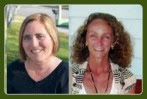
 |
| Deborah Hopkinson |
Deborah Hopkinson: I was inspired to write about Annie Sullivan
and Helen Keller after reading a newspaper article about a newly discovered
early photograph of the two together. I
began researching Annie Sullivan first, since she spent part of her childhood
in Tewksbury, Massachusetts, where I lived until I was four. As the story developed, I found myself drawn
to the first few months of Annie’s experience teaching Helen.
 |
| Doreen Rappaport |
Doreen Rappaport: All of my books are about the same
thing—empowerment. Helen Keller’s life
is the story of empowerment and possibility, a journey from powerlessness to
power, from helplessness into helpfulness, from ignorance to knowledge. When I have visited schools, children
inevitably ask me, “When are you going to do a biography about Helen
Keller?” I realized that kids react
emotionally to her struggles and conquering of her extraordinary disabilities.
Her life confirms for them that even under the most difficult circumstances
people can triumph. I realized it was
time to do a book on her.
MS: It's fascinating that your picture books on Helen Keller take
such different approaches. How did you decide to focus and organize your work
on Helen Keller? What prompted the way you organized/focused your stories?
Deborah Hopkinson: Although the moment at the water pump is now so well-known,
actually it’s what happened in the months after that I found most
fascinating. It seemed natural to use
the details in Annie Sullivan’s letters in my story. I think we forget how young Annie herself was
when she first took on this job – she was just twenty-one years old during that
spring of 1887.
Annie’s own excitement and Helen’s amazing progress are palpable
in her correspondence. Annie herself had a tremendously difficult and traumatic
childhood, losing her mother, brother, and, for a time, her sight. She had just graduated from the Perkins
School for the Blind when she traveled to Alabama to take a job teaching Helen
in 1887.
The centennial edition of Keller’s The Story of My Life includes Annie Sullivan’s letters to Mrs.
Sophie Hopkins, her friend and former house mother at Perkins School for the
Blind. Once I read those, I knew that
they would serve as the scaffolding for my book.
Doreen Rappaport: I love how Deborah concentrated on the relationship between
Annie and Helen. She gave kids a close-up of great teaching and the equal
responsibility of a student to empower him/herself. Of course I included their
relationship in my book but as I was reading about her, I realized the scope of
her latter accomplishments and thought it important for kids to learn about her
adult life and work, and so I decided to cover her life from birth until
death. Helen Keller was controversial;
she spoke up for what she believed in even when it was unpopular, and she
connected with and promoted causes way beyond her commitment to bettering the
life of other disabled people.
MS: What is something surprising that you discovered about Helen
Keller during your research?
Deborah Hopkinson: I think I came away with a renewed appreciation of her
incredible drive to learn. That she could go from not having language to being
able to write a letter in four months is a testament to her dedication and
brilliant mind.
Doreen Rappaport: I never knew she starred in a movie, which turned out to be
a painful experience for her. I never
knew she was on the vaudeville circuit.
She needed money so she performed. She was criticized for it, but it
gave her a sense of independence, and for someone who had to depend on others a
lot of the time, this must have felt wonderful.
I found questions and answers from these vaudeville performances and
realized she had a wonderful sense of humor.
MS: What primary source was particularly useful for your research?
Deborah Hopkinson: Without a doubt, Annie’s letters themselves were my
inspiration. We see so clearly her
excitement as her pupil blossoms and begins grasping language, making progress
every day.
It’s not very different from a parent exclaiming over the new
words his or his toddler is learning. In
fact, we can give some credit to Helen’s little sister, Mildred, as the
inspiration for Annie’s methods. Annie
realized that people talk naturally to a toddler, using full sentences, whether
the child has learned each word or not.
And that’s exactly what she began to do as she taught Helen.
Doreen Rappaport: Her many biographies and speeches were all valuable and
seeing photographs of her and a clip from a movie that she is in, which you canfind on my website, also made me feel close to her feelings, struggles, and
spirit.
MS: How do you try to share this sense of primary sources with
children? (photographs, quotes, etc.)
Deborah Hopkinson: The book is actually organized into sections, or
mini-chapters around quotations from Annie’s letters. The story can be read without delving into
them, but I think if it is shared with a child by a parent, the adult can point
out how, in fact, we are telling two people’s stories here. It meant almost as much to Annie to be
successful as a teacher as it did for Helen to be able to enter this amazing
new world of communication and language.
I’m glad we were able to include those evocative historical
photos as well. I am grateful to the staff at Perkins for reading the
manuscript and making the available the photos on the endpapers.
Doreen Rappaport: My biography is punctuated with quotes from her
autobiographies and letters, etc. because it gives children a chance to hear
“her voice”. Including her words reinforces the importance of primary
sources. I also included letters she
wrote as a young girl, and my wonderful illustrator, Matt Tavares, reproduced
the Braille with its appropriate objects, showing how Helen learned to read
Braille.
Editor's Note:
Mary Ann Scheuer is the librarian at Emerson School, a public elementary K-5 school in Berkeley, CA. She created Great Kid Books, as a site to help parents find books for their children, ages 4 - 14. Mary Ann is also the Cybils Book App award coordinator, and the co-chair of author events at 2013 AASL National Conference. Come say hello on Twitter @MaryAnnScheuer!